New Boom: Boomers in the Classroom

Print Article

Posted Apr 3rd 2009 10:31AM

By Craig Howie, for AOL Find a Job

boomer in classThe learning center at Long Beach City College looks like any other across the nation, although a recent rehab means the students work on shiny new computers that glint in the bright Southern California sunshine streaming into the breezy and welcoming open-plan learning space. Perhaps surprisingly, though, to an outsider is the fact that most of the students brushing up on their studies here are adults.

Like Tim Opitz, a trucker who delivered freight across the nation for 23 years and who is one of an estimated 2 million older Americans returning to education to boost their skillsets and qualifications as jobs become harder to find in a deteriorating economy.

Opitz is looking to combine his knowledge of trucking with a little extra learning to give him an advantage in applying for local, green transport-related jobs he believes are the future of the trucking industry. Right now, he's focused on learning more about computers and the Web, and getting his high-school diploma.

"Basically my kids have grown up and left the house and my wife is by herself now, and with being a truck driver I'm gone out of state for weeks at a time. But I now have a great opportunity here at the city college to go in and study and get my education.

"I'm trying to look at something that's going to be stable in the near future, I'm kicking it around between automotive and new hybrid technologies. There's a new facility here [in the city] that runs a training program that educates you in the field of hybrid and diesel trucks, going into LNG [liquefied natural gas], alternative fuels, bio-diesel that eventually, in the future, that's what it's all going to become. We're all becoming more energy efficient.

"The people are great, things are going real well. I get a lot of help from the staff here. I've only been doing this two weeks and I have already progressed. I already have a tenth-grade education. But my ultimate goal is to get a starting point, get my GED, spend a little more family time with the wife now that the kids are gone. It takes a lot of responsibility to operate an 80,000-pound rig, but education is the one thing that I've lacked."

Phyllis Arias, the interim department head at the state-funded college, says last year's multimillion-dollar rehab of the community college's adult-learning library and workspace has helped her team accommodate a surge in adults returning to education, which she attributes directly to the economy. Usually, she says, her student body combined will take about 1200 hours of weekly study. Now, her desktop computer shows weekly hours nearing 1800, a nearly 50 per cent rise in about a year.

"This year we are much busier with our adult-ed students," she says. "Our program is individualized and self-paced and open-entry and open-exit, so students can start here at any time. Students are individually assessed to determine their basic skills and needs, and our instructors talk to them about their goals. We assess their skills and then we determine a course of study, and we set specific goals depending on what they're interested in.

"They work independently in our lab on materials ranging from pen and paper to the latest software. They work the hours that they want and they get access at all times to faculty, tutors and instructional assistants. So they get face-to-face help but also are working independently."

Students, which Arias says include a high percentage of seniors and boomers, range in age "anywhere from 18 up." Here, they can take the high-school diploma exams and are prepped for further education in both English and Spanish. While the college doesn't do job placement or career development -- although such programs are common, and usually available locally -- Arias says her students benefit greatly when applying for jobs by having a certificate of their high-school education, and points out that a high-school diploma is often a necessary qualification to enter fields such as nursing.


It's a course increasingly being taken by millions of Americans who are finding unemployment rates creeping above 10 percent in some states and a national rate of 8.1 percent that's widely expected to increase. Senior unemployment nationally hit a 31-year high of 5.1 percent in December last year, at a time when many are looking for ways to re-enter the workplace after a fall in the value of their retirement funds. Adult education programs in California last year received $752 million from the state's general fund, or about $2650 per student.

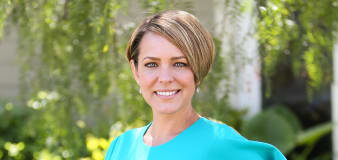
Frank Smith, a single father of three and a bus driver for 30 years before diabetes forced him to change his career, says the economy steered his choice to gain the technical skills he says he needs to adapt to a rapidly changing workplace.

"I never had the time to finish my high school education so I came back here to finish it. With everything that's going on in the world, you have to be educated to get a job. Although today you just don't know, even people with an education are losing their jobs."

He finds working with computers "challenging" but says the daily work with computers means he can keep up with the latest technology. "Every day they come up with something new. It's tough but you get the hang of it." he says. After graduating, Smith wants to find a "good job, a change, something different." He says his studies will help him to continue to raise his three daughters, one of whom graduated from high school last year, and proudly watch a second daughter graduate from high school this year knowing he's accomplished every bit as much as she has, and also has invaluable experience to match.

It's never too late to increase your opportunities
Learn more at University of Phoenix


Next: What's Your Learning Style? >>

Reader Comments (Page 1 of 1)

Add your comments

First time? A confirmation email will be sent to you after submitting.


Please keep your comments relevant to this blog entry. Email addresses are never displayed, but they are required to confirm your comments.

When you enter your name and email address, you'll be sent a link to confirm your comment, and a password. To leave another comment, just use that password.

To create a live link, simply type the URL (including http://) or email address and we will make it a live link for you. You can put up to 3 URLs in your comments. Line breaks and paragraphs are automatically converted — no need to use <p> or <br /> tags.

ADVERTISEMENT

Find a Job

Search by Company
Search by Industry


Job Search Tools & Resources

Menu Down